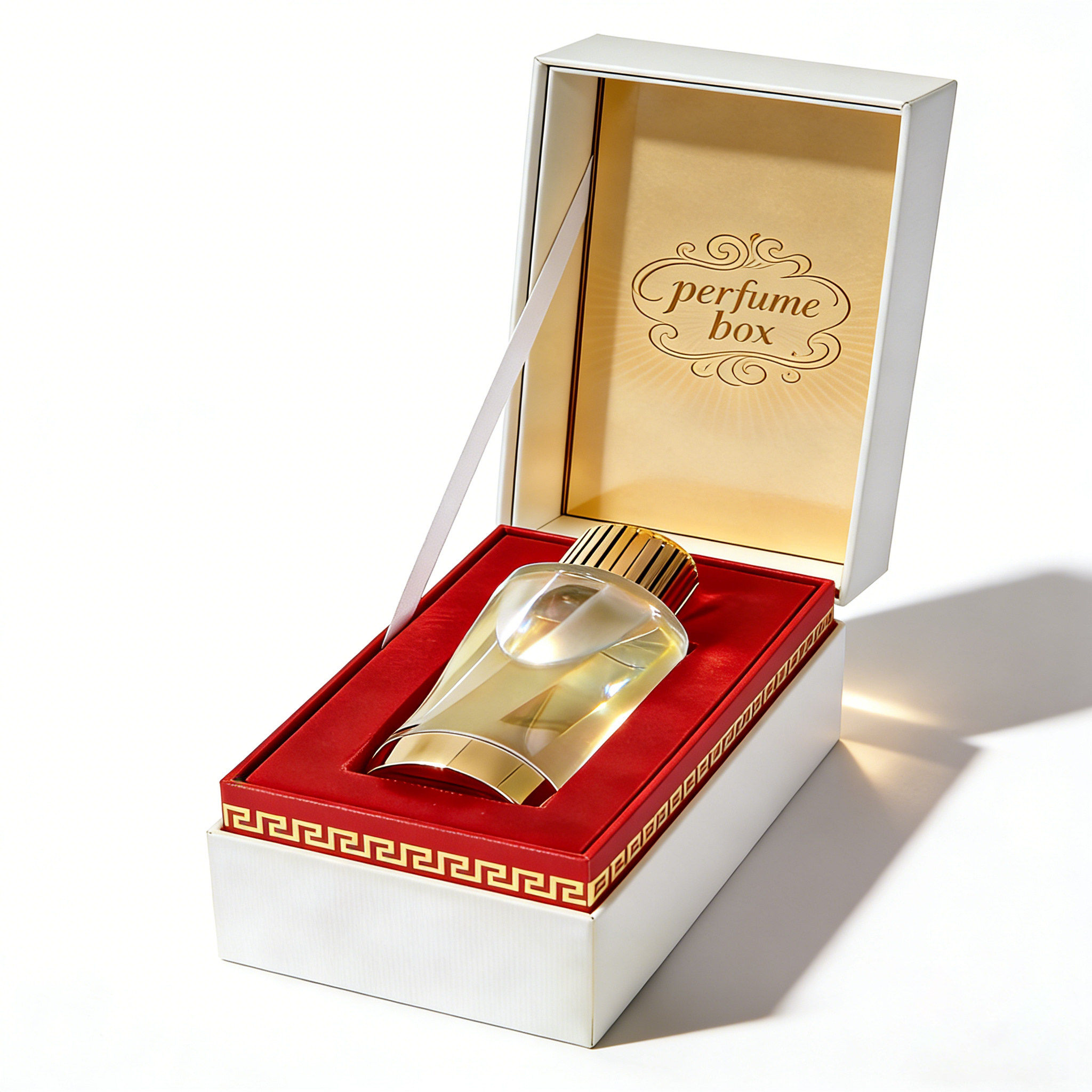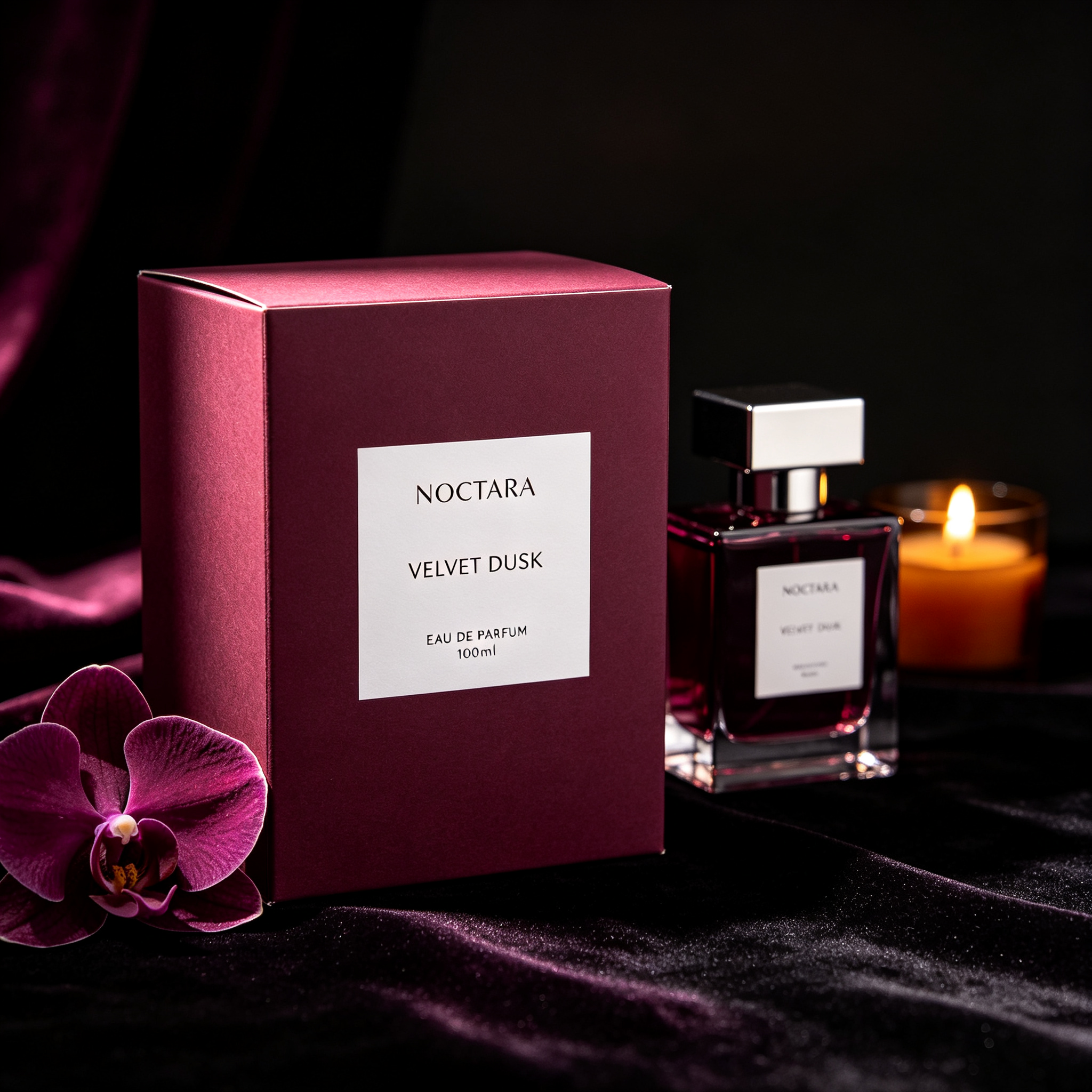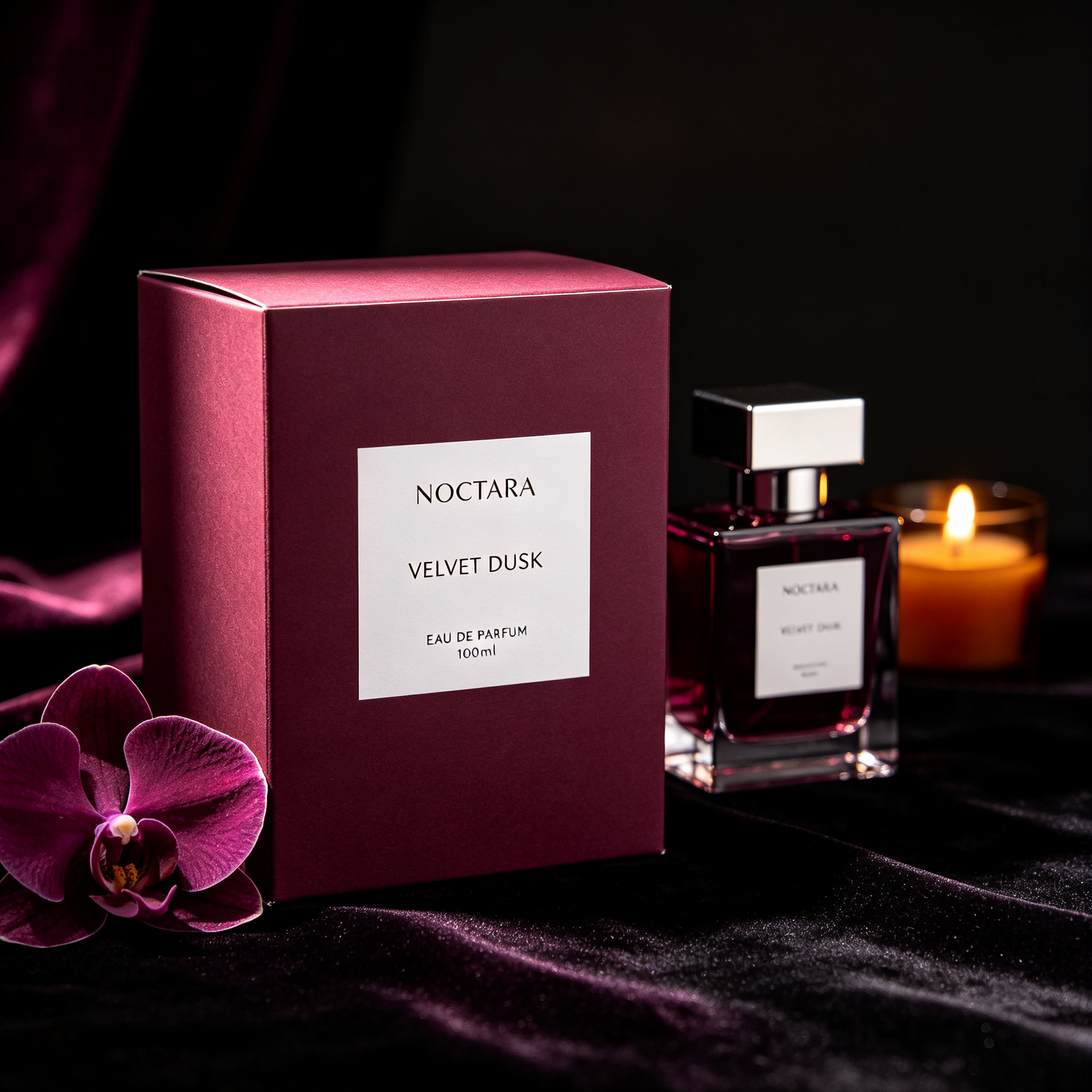
A perfume bottle sits inside a folding carton for most of its journey — from the factory line to the retail shelf to the customer's vanity. For mid-range and premium fragrances, a well-made folding carton does more than contain the bottle: it communicates brand color, protects the glass during transit, and provides a tactile first impression. This guide walks through how Shenzhen CKT Print Co., Ltd. manufactures a deep burgundy, matte-laminated folding carton for perfume — from paperboard selection through die-cutting, lamination, and quality control.
1. Paperboard Selection: Why 350–400gsm Coated Board for Perfume Cartons
A folding carton starts with the right paperboard. For perfume packaging, the board needs enough stiffness to protect a glass bottle through international shipping, yet thin enough to fold cleanly and run efficiently on automatic gluing lines.
1.1 Caliper and Stiffness
We typically specify 350–400gsm C1S (coated one side) paperboard for perfume folding cartons. At this caliper, the board holds a sharp crease without cracking at the fold, and the erected carton resists denting when packed in master cartons. Below 300gsm, the carton can feel flimsy in hand; above 450gsm, creasing becomes harder and the tuck flap may not seat properly.
1.2 Coated Surface for Solid-Color Print
The coated side provides a smooth, uniform surface for offset printing. For a deep burgundy solid-color carton, the coating helps the ink lay down evenly — reducing the mottling and grain show-through that can occur on uncoated stocks. The coating also improves lamination adhesion, which is critical for a matte finish over large solid-ink areas.
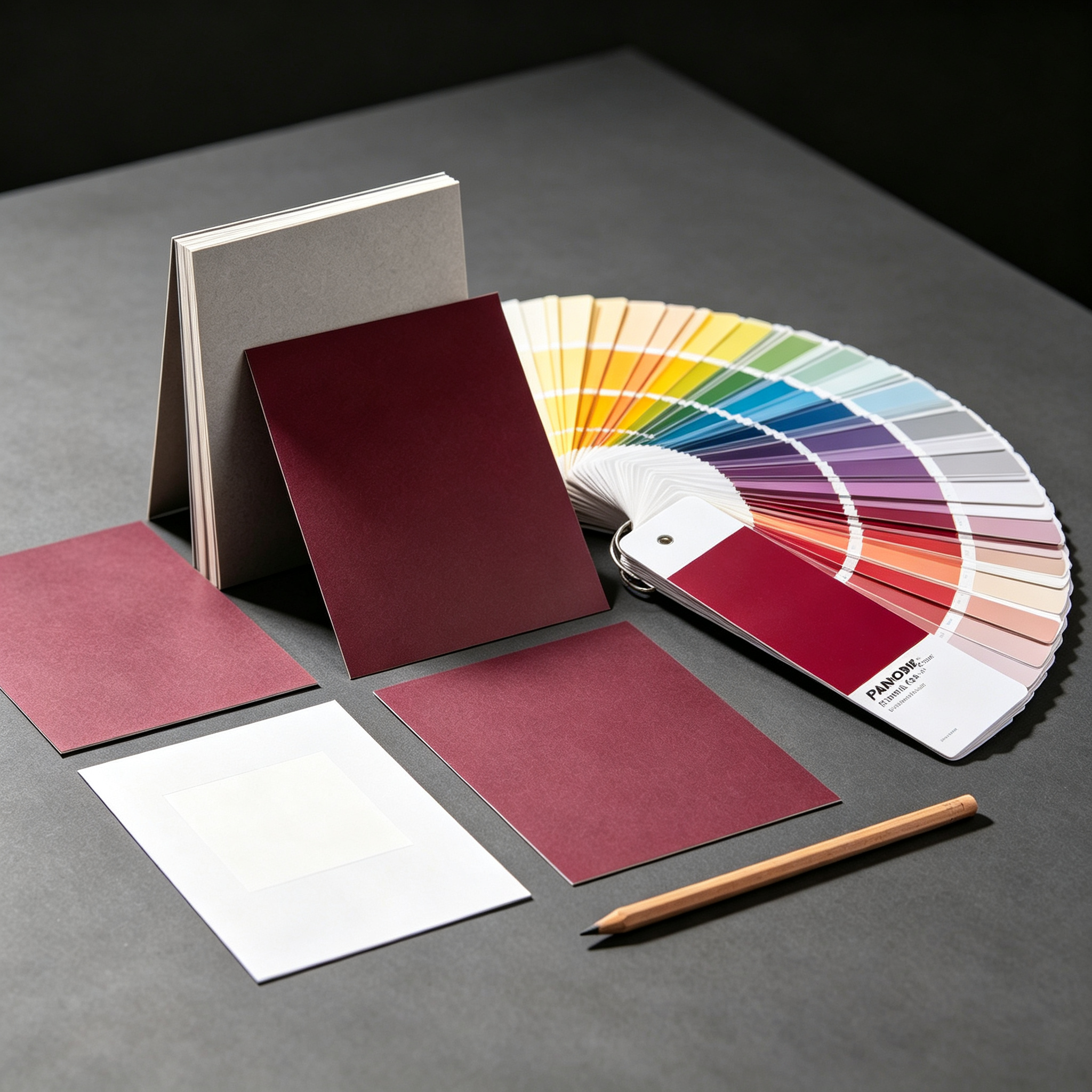
Coated paperboard samples, matte lamination swatch, greyboard cross-section, and a Pantone Formula Guide fan deck used for spot-color matching and approval.
2. Solid-Color Offset Printing: Achieving Uniform Burgundy Without Mottling
Printing a large, deep solid color is one of the more demanding jobs in carton manufacturing. Unlike a four-color process image, a solid burgundy flood coat exposes every inconsistency in ink density, roller pressure, and paper absorption.
2.1 Ink Density and Fountain Setup
We mix the burgundy as a dedicated spot color (Pantone-approved or custom-mixed) rather than building it from CMYK. A spot color delivers more consistent density across sheets and across print runs. We control ink density using a densitometer on the press, targeting a consistent density reading within ±0.05 across the run. The fountain solution pH and temperature are held steady to prevent ink-water imbalance, which causes streaking on solid areas.
2.2 White Ink and the Label Area
The carton's front features a white printed label area with the brand and product name. Printing white on a dark burgundy base requires either a double hit of white ink or printing the white area first as a base coat, then overprinting the burgundy around it. We use the latter approach — the white label area is printed on the coated board first, then the burgundy flood coat is applied around it. This gives a crisp, opaque white with no show-through of the dark color beneath.
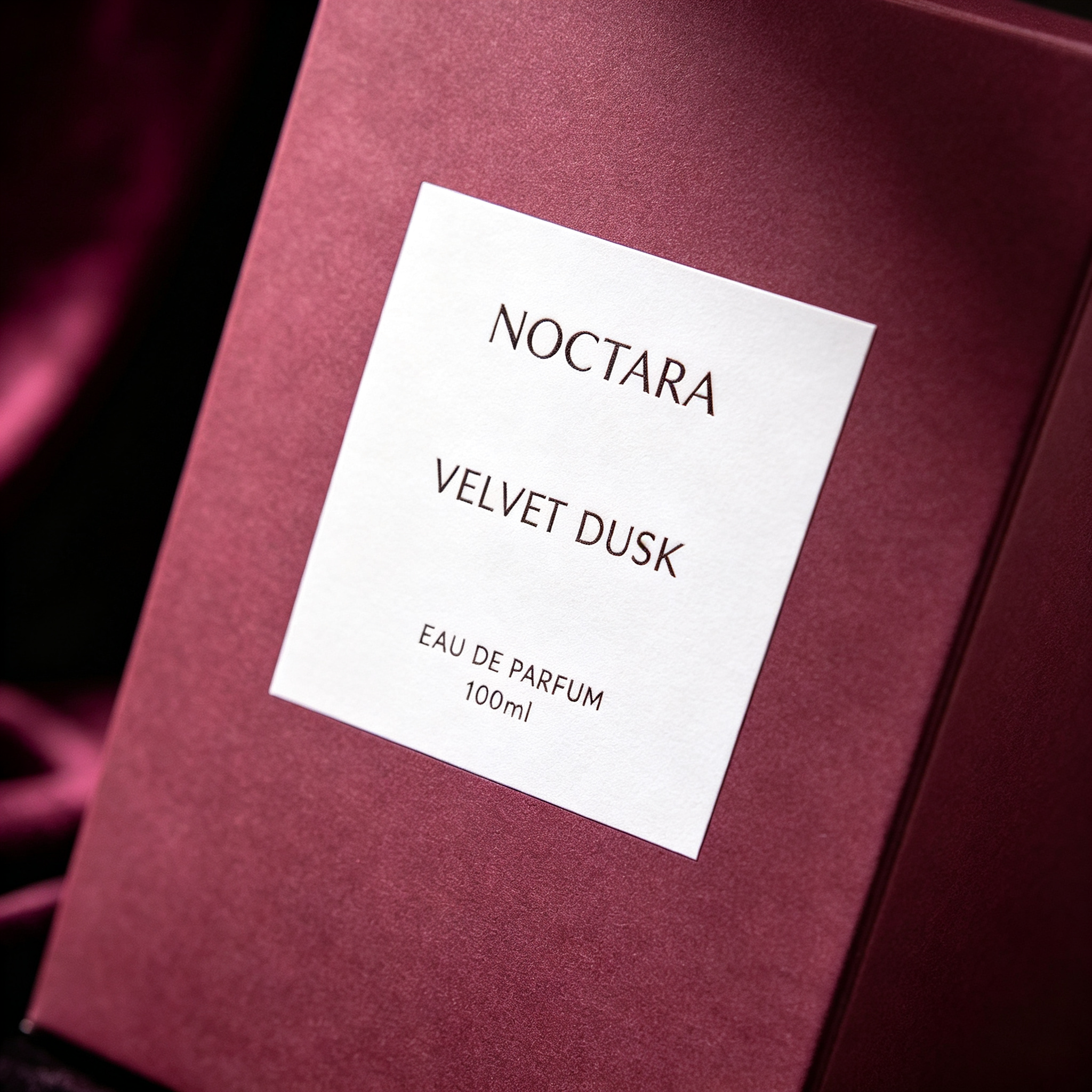
Macro view of the smooth matte burgundy surface and the white printed label area, showing paper grain and ink detail on a continuous, unbroken face.
2.3 ΔE Control and Batch Consistency
For repeat orders, color consistency is measured in ΔE (Delta E), the numerical difference between two colors. We hold batch-to-batch ΔE to ≤2.0 for the burgundy spot color — a difference most observers cannot detect without side-by-side comparison. We retain a signed-off color standard (press sheet) for each SKU and compare every new run against it. If a run exceeds ΔE 2.0, we adjust the ink formula and reprint before the job proceeds to lamination.
3. Matte Lamination: Protecting Deep Tones and Elevating Touch
After printing, the carton sheets are laminated. For a deep burgundy perfume carton, matte lamination is the default choice — and the choice that requires the most process control.
3.1 Matte vs Soft-Touch vs Gloss
Gloss lamination on a deep solid color shows every fingerprint, surface scratch, and lamination bubble. It also tends to look "plastic" rather than premium. Matte lamination deepens the perceived richness of the burgundy, hides minor surface imperfections, and provides a smooth, low-reflection touch. Soft-touch (velvet) lamination goes a step further with a suede-like feel, but it costs roughly 15–20% more and is more susceptible to marking from hand oils. For most mid-premium perfume cartons, standard matte BOPP lamination offers the best balance of feel, durability, and cost.
3.2 Lamination Adhesion on Solid-Ink Areas
The biggest risk with laminating over a large solid-ink area is poor adhesion — the film can lift or bubble at the creases or edges. This happens when ink drying time is insufficient, or when the ink layer is too thick. At Shenzhen CKT Print, we allow printed sheets to dry for a minimum of 24 hours before lamination, and we run a cross-hatch adhesion tape test on the first 100 sheets of every new solid-color design. If the film lifts at the cross-hatch lines, we adjust drying time or ink density before proceeding.
4. Die-Cutting, Creasing and Tuck-Flap Closure
A folding carton is a flat sheet until it is die-cut and creased. The precision of this step determines how squarely the carton erects and how reliably the tuck flap closes.
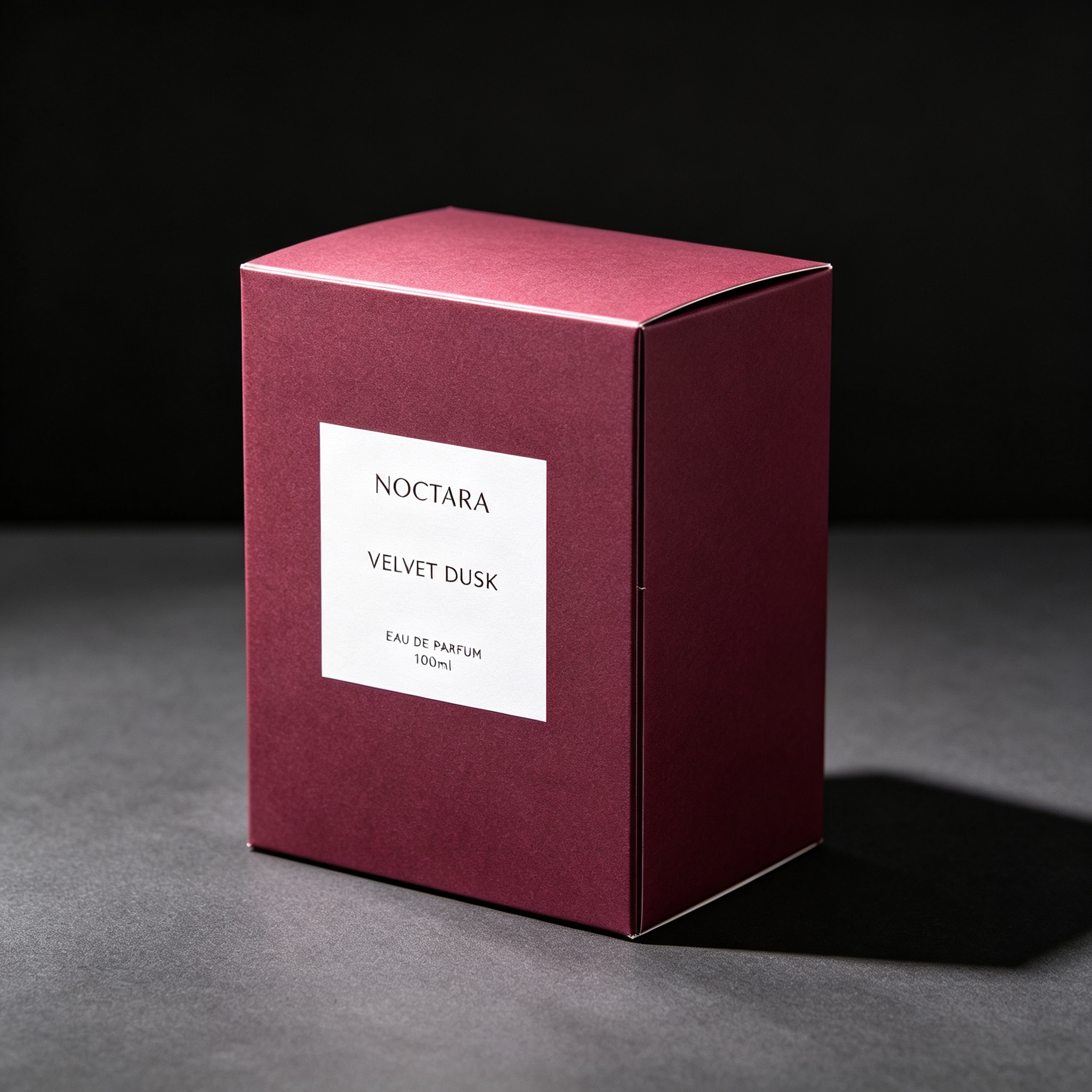
Side profile of the closed thin-profile folding carton on a matte work surface, showing paperboard thickness, crisp folded corners, and the tight, flush glue seam.
4.1 Steel-Rule Die and Crease Matrix
We use a laser-cut steel-rule die with ejection rubber for carton cutting. The crease lines are formed using a male crease rule and a female matrix (channel) sized to the board caliper. For 350–400gsm board, the crease matrix width is typically 1.5× the board thickness — too narrow and the board cracks at the fold; too wide and the crease is loose and the carton doesn't hold its shape. We check crease quality on the first 50 die-cut sheets by folding each crease by hand and inspecting for fiber cracking.
4.2 Tuck Flap Retention and Opening Force
The tuck flap is the top (and bottom) closure panel that inserts into the carton. It needs to stay closed during shipping but open easily for the end consumer. We design the tuck flap with a 3–4mm locking shoulder on each side and a slight curvature to the leading edge. The opening force is measured on a sample of 20 erected cartons — we target a range of 8–15N. Below 8N, the flap can self-open in transit; above 15N, the carton feels difficult to open and the flap may tear.
4.3 Automatic Fold-and-Glue Line
For quantities above 2,000 pieces, we run the cartons on an automatic folder-gluer line. The line folds the side seam (manufacturer's joint), applies a bead of water-based adhesive to the glue flap, and compresses the seam under controlled pressure so it sits flush with the panel — no gap, groove, or metal fastener. We monitor glue line temperature, compression pressure, and belt speed in-line. The side seam is inspected for squeeze-out (excess glue) and for bond strength — we test by pulling the seam apart on a sample of 30 pieces per batch; the bond must fail by fiber tear (paper splitting), not by adhesive release.
5. Sampling, QC and Batch Consistency
Before mass production, and at multiple checkpoints during it, we verify that the carton meets the approved standard.
5.1 Digital Proof and Physical Dummy
Every new carton design starts with a digital color proof (on the actual paperboard stock) for customer sign-off. Once the proof is approved, we produce a physical dummy — a hand-assembled sample using the actual die-cut shape, lamination, and glue. The dummy confirms: color match against the Pantone standard, tuck flap fit, carton squareness, and bottle fit inside the erected carton. We do not begin mass production until the customer signs off on the physical dummy.
5.2 In-Line QC Checks
During mass production, our QC team checks at three stations: (1) the printing press — color density, registration, and print defects every 500 sheets; (2) the die-cutter — cut quality, crease depth, and blank dimensions every 200 sheets; (3) the folder-gluer — glue bond, squareness, and tuck flap function on every pallet. Defective blanks are pulled and recorded; we target a defect rate below 1.5% at final inspection.
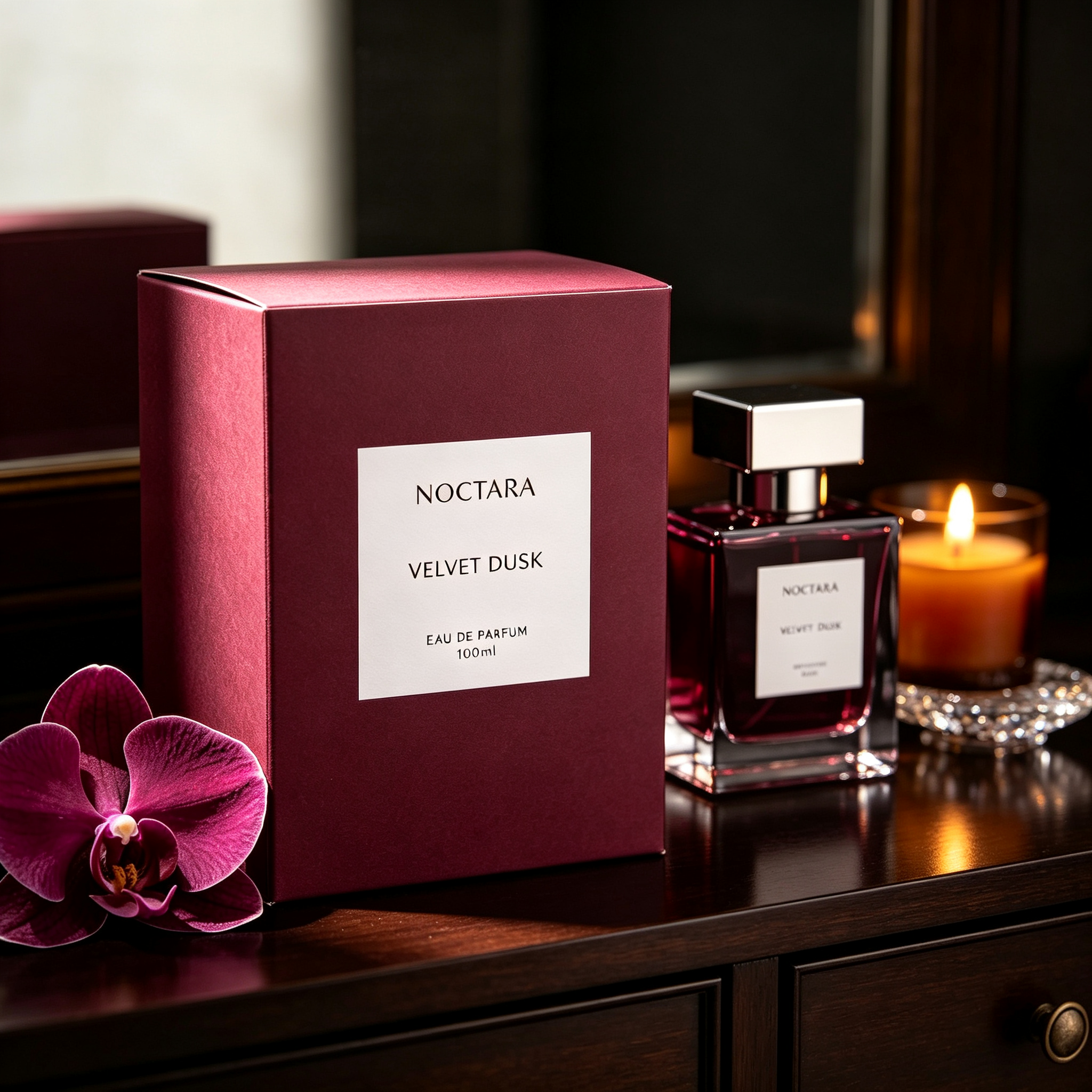
The finished carton with its fragrance bottle on a dark vanity — the end result of paperboard selection, solid-color printing, matte lamination, and precision die-cutting.
6. OEM/ODM Workflow, MOQ and Lead Time
Shenzhen CKT Print Co., Ltd. works with fragrance brands, cosmetics companies, and private-label sellers on both OEM (customer-supplied design) and ODM (we assist with structural design and print preparation) projects.
Our standard workflow:
<!--[if !supportLists]-->· <!--[endif]-->Inquiry & artwork review — we assess the design for printability, recommend paperboard and finish, and provide a quote within 24–48 hours.
<!--[if !supportLists]-->· <!--[endif]-->Sampling — digital proof (3–5 days) and physical dummy (5–7 days), with express shipping available.
<!--[if !supportLists]-->· <!--[endif]-->Mass production — 12–18 working days after sample approval, depending on quantity and finish complexity.
<!--[if !supportLists]-->· <!--[endif]-->QC & packing — final inspection, then packing into export master cartons with dividers.
<!--[if !supportLists]-->· <!--[endif]-->Shipping — FOB Shenzhen / Yantian, CIF, or DDP to your destination.
MOQ: 500 pieces for standard folding cartons (custom size and print). Lower trial quantities may be available for hand-assembled runs — ask for details.
Capacity: Our folding carton lines produce approximately 80,000–120,000 pieces per day across two shifts, supporting both small brand launches and large repeat orders.
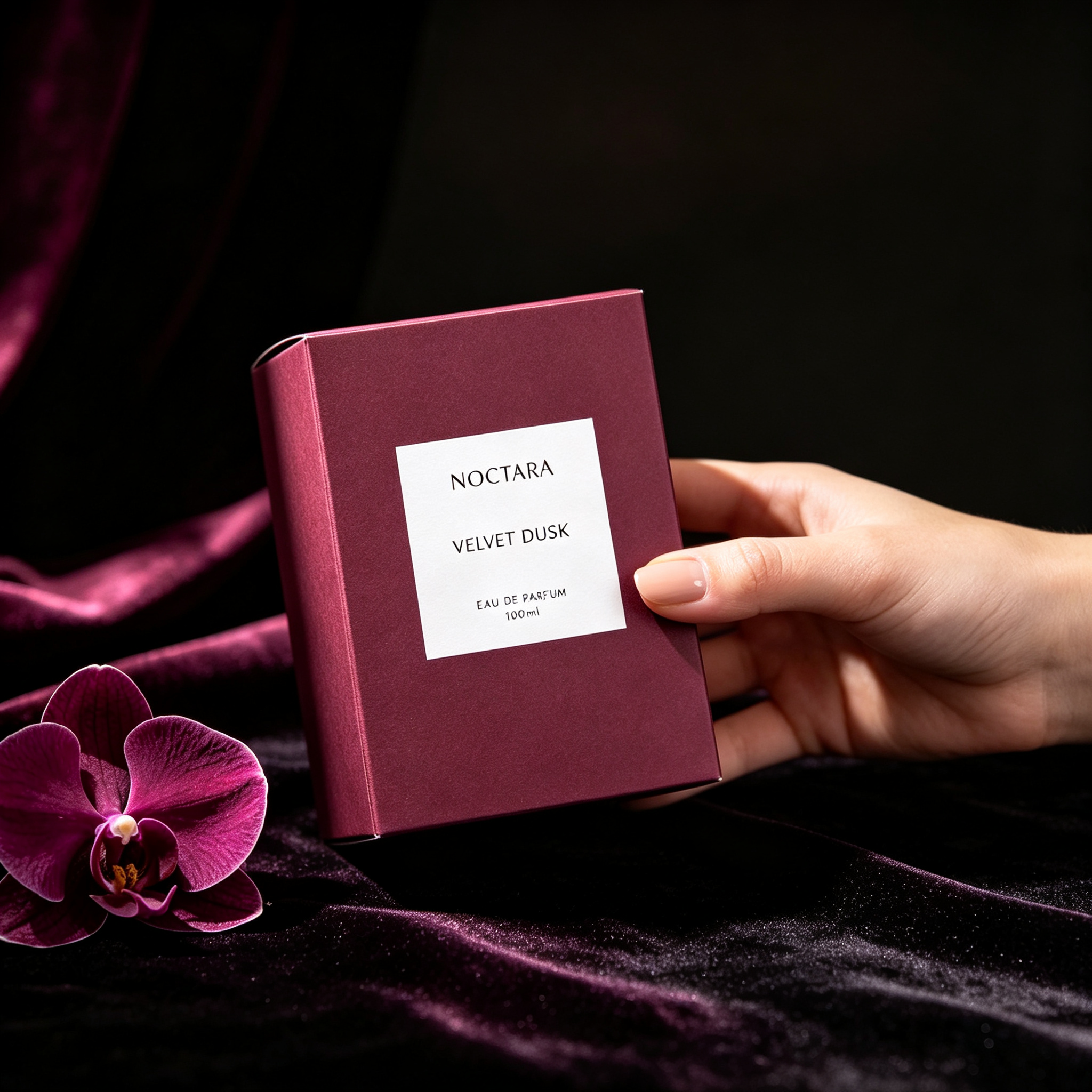
The carton in hand — a 350–400gsm matte-laminated folding carton feels substantial without the weight or cost of a rigid setup box.
A folding carton is often the most cost-effective way to give a fragrance brand a premium, color-consistent, retail-ready package — provided the printing, lamination, and die-cutting are controlled at every step.
Contact Shenzhen CKT Print Co., Ltd.
Ready to develop a custom folding carton for your fragrance or cosmetics line? Send us your bottle dimensions, artwork, or an existing sample — we'll recommend the right paperboard, print process, and finish, and provide a quote within 24–48 hours.
Contact: Sherry Wu
Mobile / WhatsApp: +86 15815525889
Email: info@cktprint.com
Website: www.cktprint.com
Alibaba Store: https://cktprint.en.alibaba.com/
Factory Address: 2-3F, Building 3, Zhong Xin Industry Area, No.8 Yuhu Road, Fenggang Town, Dongguan City, Guangdong, PRC.


 Your message must be between 20-3,000 characters!