A custom sliding-drawer rigid box for pressed-powder palettes and fragrance coffrets: 155 x 100 x 25 mm reference outside dimensions, 2.0 mm grey board sleeve and tray, full-colour printed wrap paper with selective spot UV on the lettering, a 15 mm grosgrain ribbon pull, and a fitted finger-notch recess available in EVA, flocked EVA, moulded pulp or folded paperboard.
Every figure below is stated either as a reference dimension confirmed at sampling or as a process parameter. Nothing in this page is a measured performance claim.
1. Box Construction: Sleeve, Tray and the Gap Between Them
The box is two bodies, not one. The sleeve is a closed four-wall shell of 2.0 mm grey board wrapped at the ends so that no board edge is visible; the tray is a shallow open-top box of the same board that slides inside it. What the customer reads as a single object is the relationship between those two tolerances, and that relationship is the whole engineering problem of a drawer box.
The sleeve carries the printed story. In this programme the artwork runs full bleed across the sleeve face and drops over the side wall, and a photographic band of crushed pigment crosses the seam between face and wall, so the print has to hold registration across a fold. The tray carries the colour: its inside faces are wrapped in a solid plum that only becomes visible when the tray is drawn out. That contrast is the point of the structure; a magnetic flip lid shows everything at once and has nothing left to reveal.
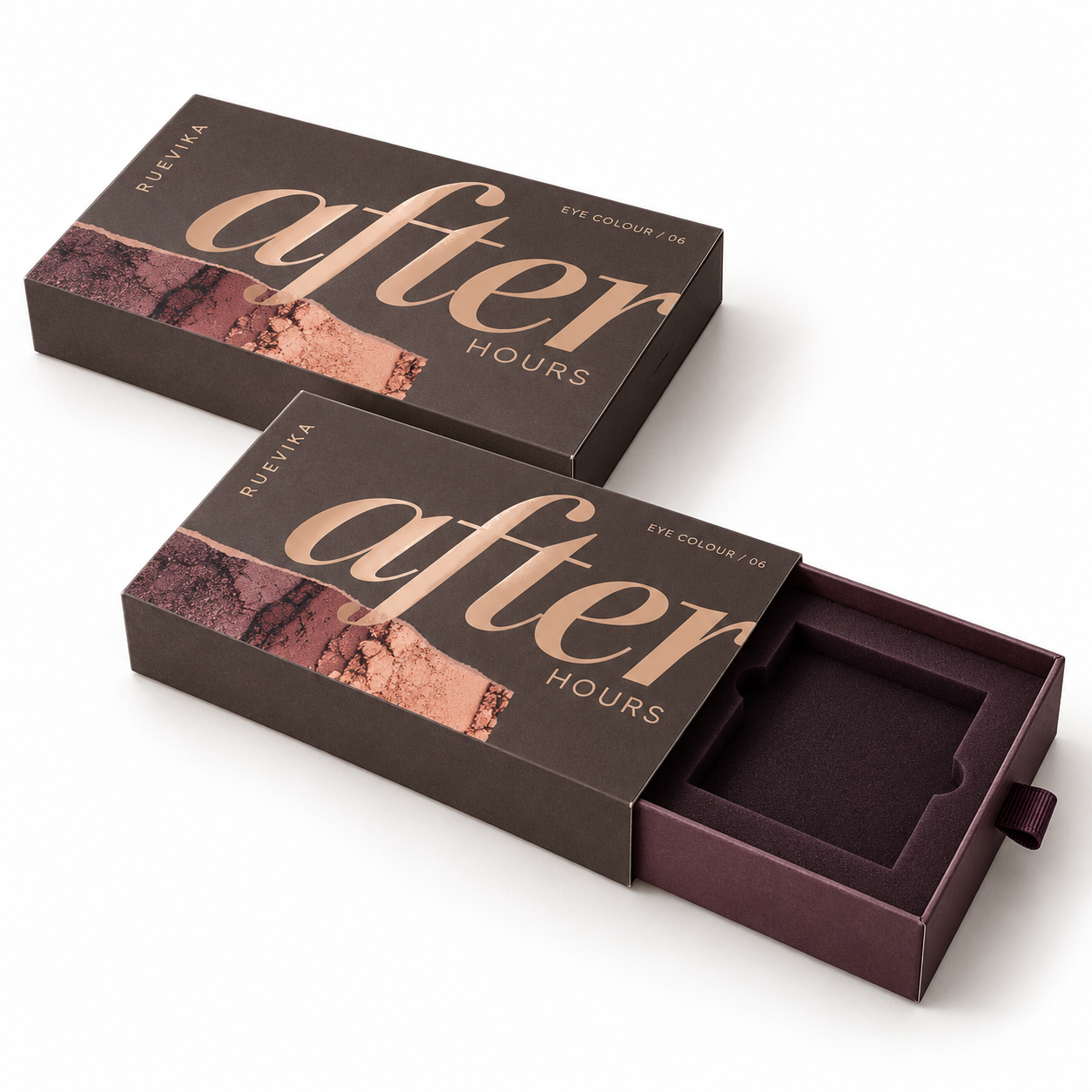
Figure 1. Closed sleeve and open tray. The tray interior is wrapped in solid plum; the ribbon pull sits at the open end.
2. Insert Geometry: The Recess, the Finger Notch and Four Material Options
The insert is a single fitted block with a square recess cut to the product footprint plus a per-side clearance of roughly 1.5 to 2 mm. Along one edge of the recess there is a curved finger notch, cut back into the block so that an index finger can reach under the pan and lift it without touching the powder surface. It is the cheapest possible ergonomic addition and the one most often left out of a first quote.
Four materials are offered for the same recess, and the choice decides cost, feel and the end-of-life story in equal measure. EVA foam gives the tightest dimensional control and precise cut recesses. Flocked EVA adds a short-fibre surface that reads as fabric and absorbs the handling marks that plain foam collects. Moulded pulp is a plant-fibre, paper-based block that recycles in the paper stream and separates cleanly from the box. Folded paperboard and corrugated inserts are the lowest-cost route, with less dimensional stability and a visibly more mechanical look. The same sleeve accepts any of the four, so a brand can move from foam to pulp at the second order without changing the box or the artwork.
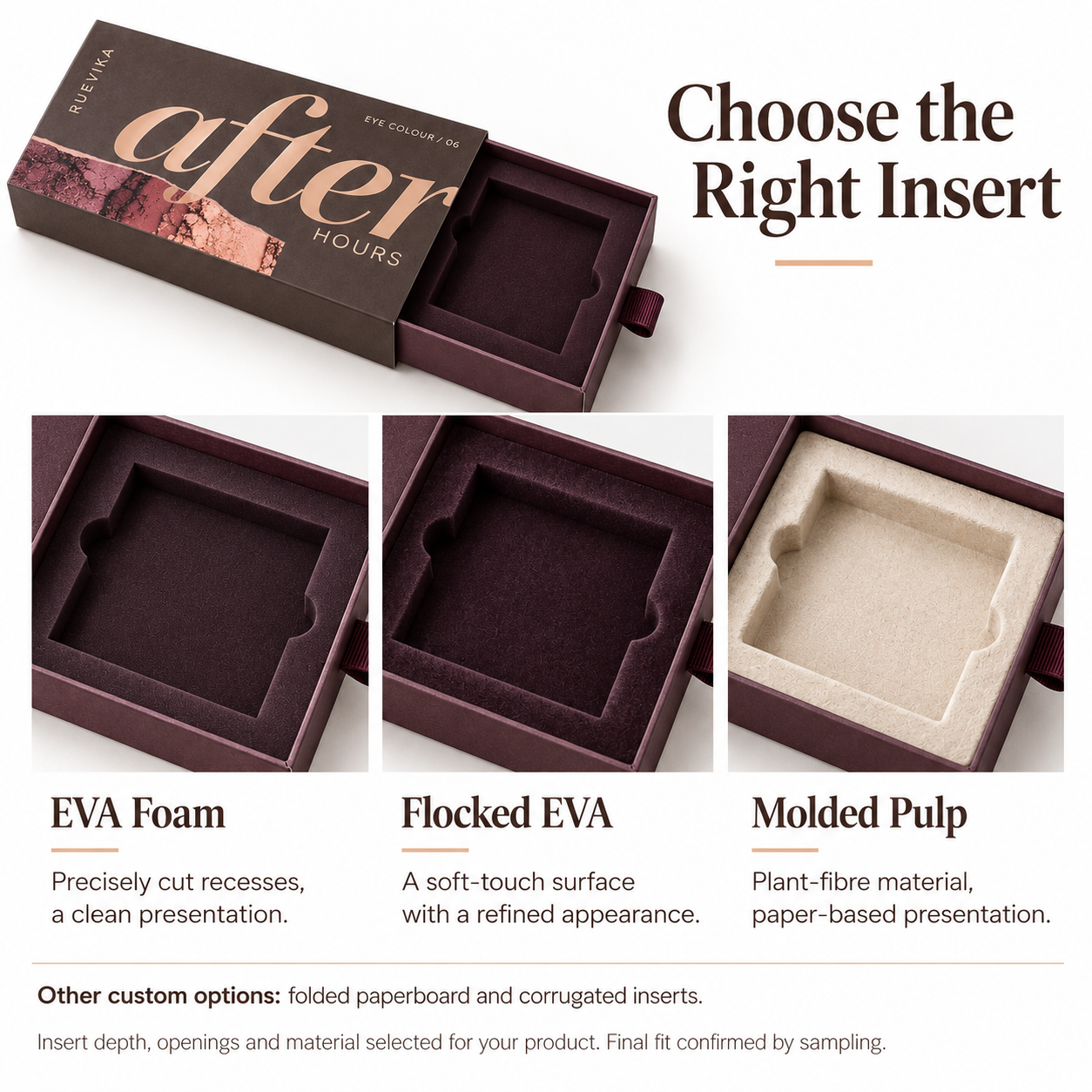
Figure 2. The same recess in EVA, flocked EVA and moulded pulp; folded paperboard and corrugated are available on the same geometry.
3. Print and Finishing: What the Photographs Actually Show
Three finishing facts are visible and worth stating precisely, because they are routinely confused in supplier copy. First, the wrap is printed: the ground is a solid warm brown and the pigment band is a photograph, both reproduced on art paper and glued around the board. Second, the gloss on the script lettering is selective spot UV, not foil: it sits as a raised varnish over matt print, so the letterform catches light without adding a metal layer. Third, the only metal on this unit is none at all; hot-foil stamping, embossing and debossing are separate upgrades that change both the price and the recyclability of the wrap.
The practical consequence of spot UV is registration. A varnish plate has to land inside the letterform edge on every sheet, and a thin script stroke leaves little room for drift, so the artwork is built with a dedicated spot-UV layer rather than a flood coat. That plate is a one-off cost and it does not scale with order quantity, which is why the finishing decision belongs in the artwork stage rather than in the quotation stage.
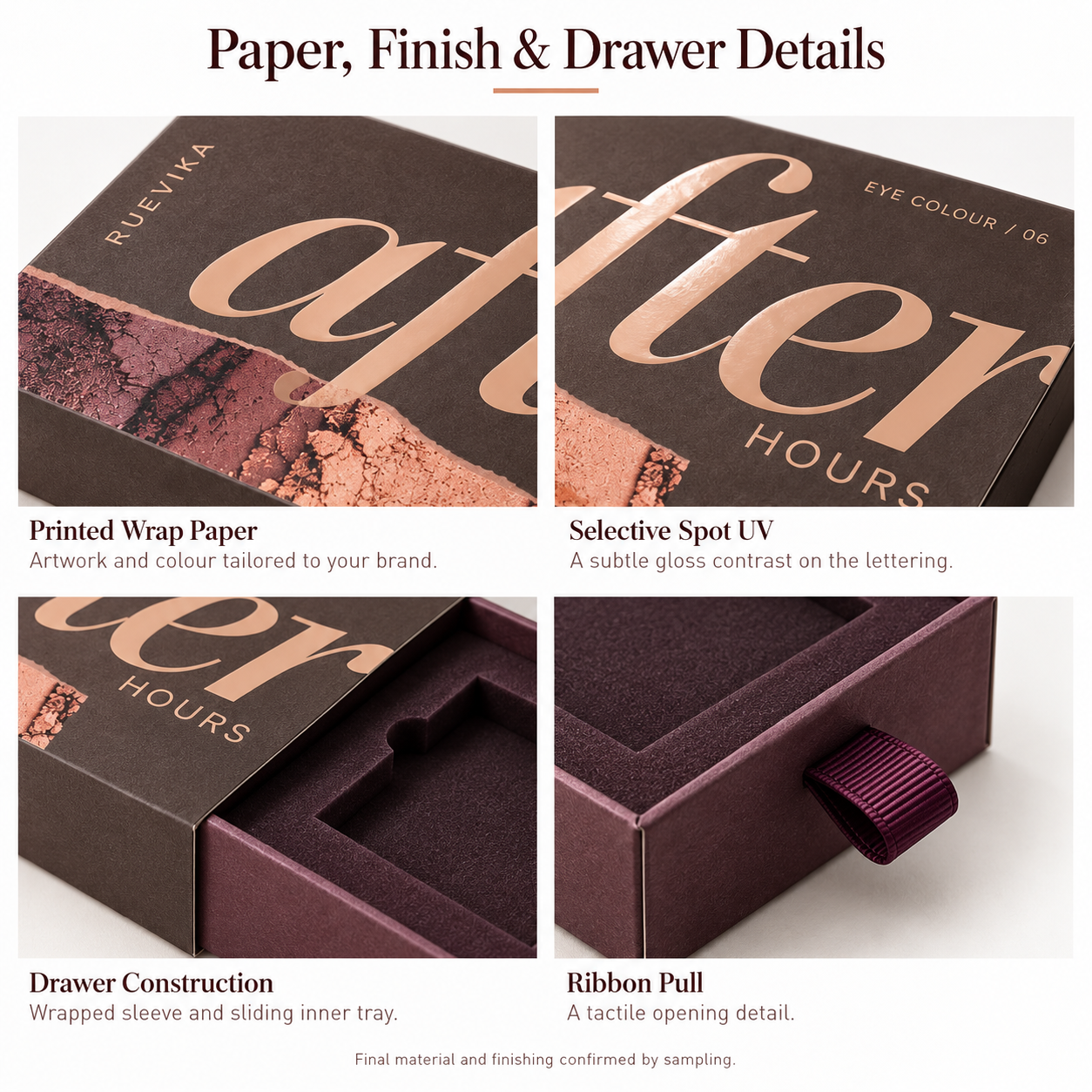
Figure 3. Printed wrap paper, selective spot UV on the lettering, drawer construction and ribbon pull.
4. Dimensions and Tolerances: How 155 x 100 x 25 Was Derived
The outside dimensions are the end of a calculation, not a starting point. Working outwards from the product: the panel footprint plus the insert wall on each side, plus the drawer clearance, plus board thickness on each side gives the tray outside dimension; the sleeve adds the same clearance and board again. Height follows the same logic vertically, with the panel sitting proud of the recess edge by about 1 mm so that fingers can grip it.
A 25 mm height is a deliberate middle. Below roughly 20 mm the tray has too little wall to slide straight and tends to rock inside the sleeve; above roughly 35 mm the sleeve side walls start to bow under their own span unless the board is stepped up. The 155 x 100 footprint keeps the box inside a standard retail shelf depth and lets it lie flat for counter display.
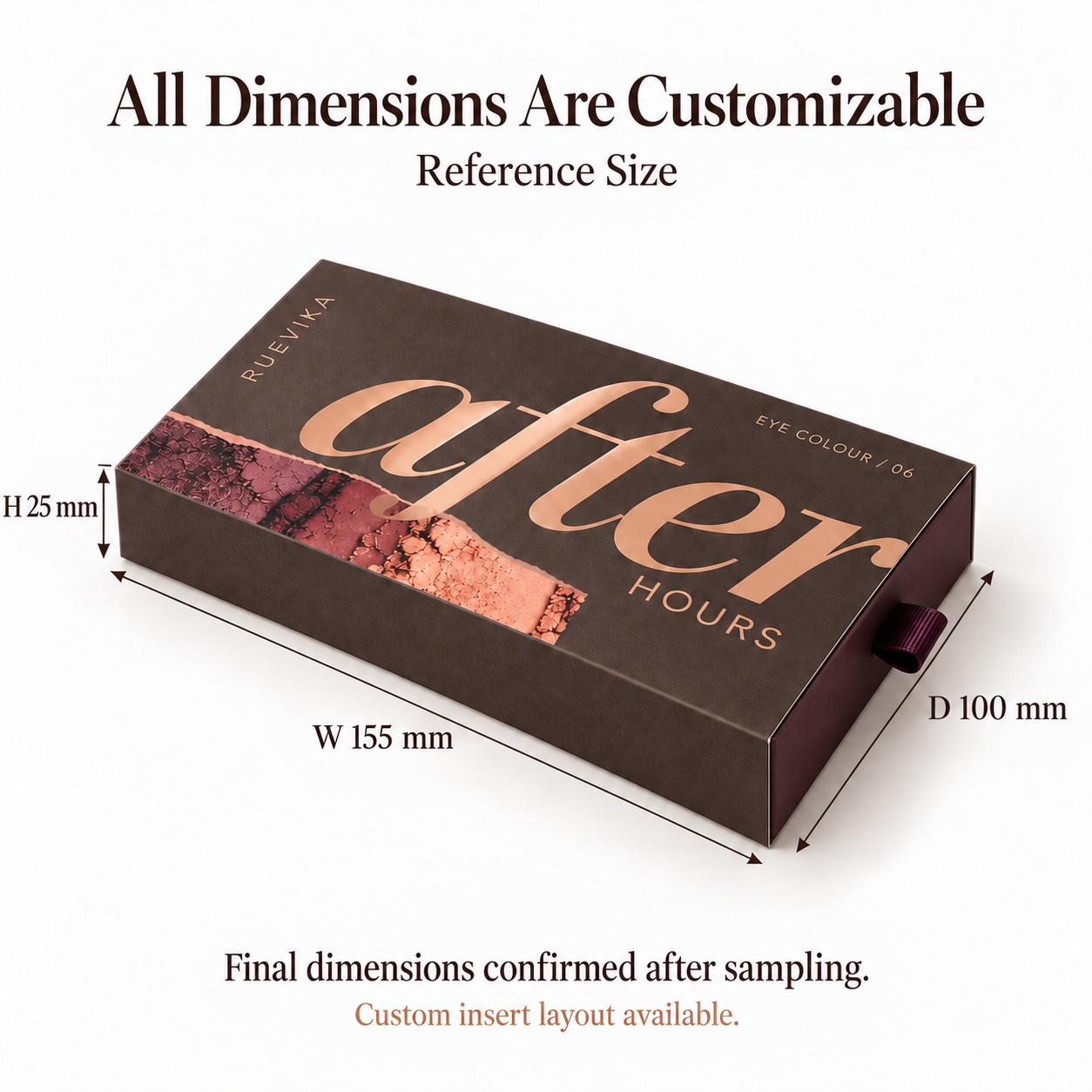
Figure 4. Reference dimensions 155 x 100 x 25 mm. All dimensions are customisable and confirmed after sampling.
5. Drawing Clearance Right: A Six-Shade Palette Programme
A colour-cosmetics brand brought a six-shade palette that had outgrown its magnetic flip box. Two constraints decided the structure: the palette had to stay visible on a peg and shelf display without being opened, and the brand wanted the palette itself to be the first thing a customer touched, not a lid. A drawer answered both. The closed sleeve carries the artwork and the shade name on the outside, so the product reads at retail without being exposed; the ribbon pull gives a defined opening gesture in a 25 mm-high face that has no room for a thumb slot without cutting into the printed band.
The first sampling round exposed the usual drawer failure: at close to 1 mm of per-side clearance the tray slid freely but rocked visibly when the box was tilted. Reducing clearance and adding a short lip at the tray opening removed the rock without introducing jamming, and the ribbon anchor was moved under the wrap rather than stitched to the tray wall so that a hard pull could not tear the board. The finishing decision followed the same logic in reverse: the brand wanted the crushed-pigment photograph to stay matte, so the gloss was confined to the lettering as spot UV instead of foiling the whole script. The name of the brand on the sample is not reproduced here; the unit shown is a structural study, and no product is supplied with the box.
6. Opening Sequence and Retail Display
The opening is three beats. The sleeve is held in one hand, the ribbon is pulled with the other, and the tray travels about 45 mm before the recess clears the sleeve wall. Colour arrives before product: the plum interior appears first, then the pan. That delay is what a drawer box sells, and it is also what it costs, because every millimetre of travel has to be tolerance-controlled.
For display, the box lies flat with the sleeve face up, which puts the printed band and the shade number at the shelf edge. The ribbon sits at the short end and does not obstruct the face. Set on a counter with the tray half open, the box shows both the artwork and the interior in one footprint, which is the arrangement most retail teams choose for a launch table.
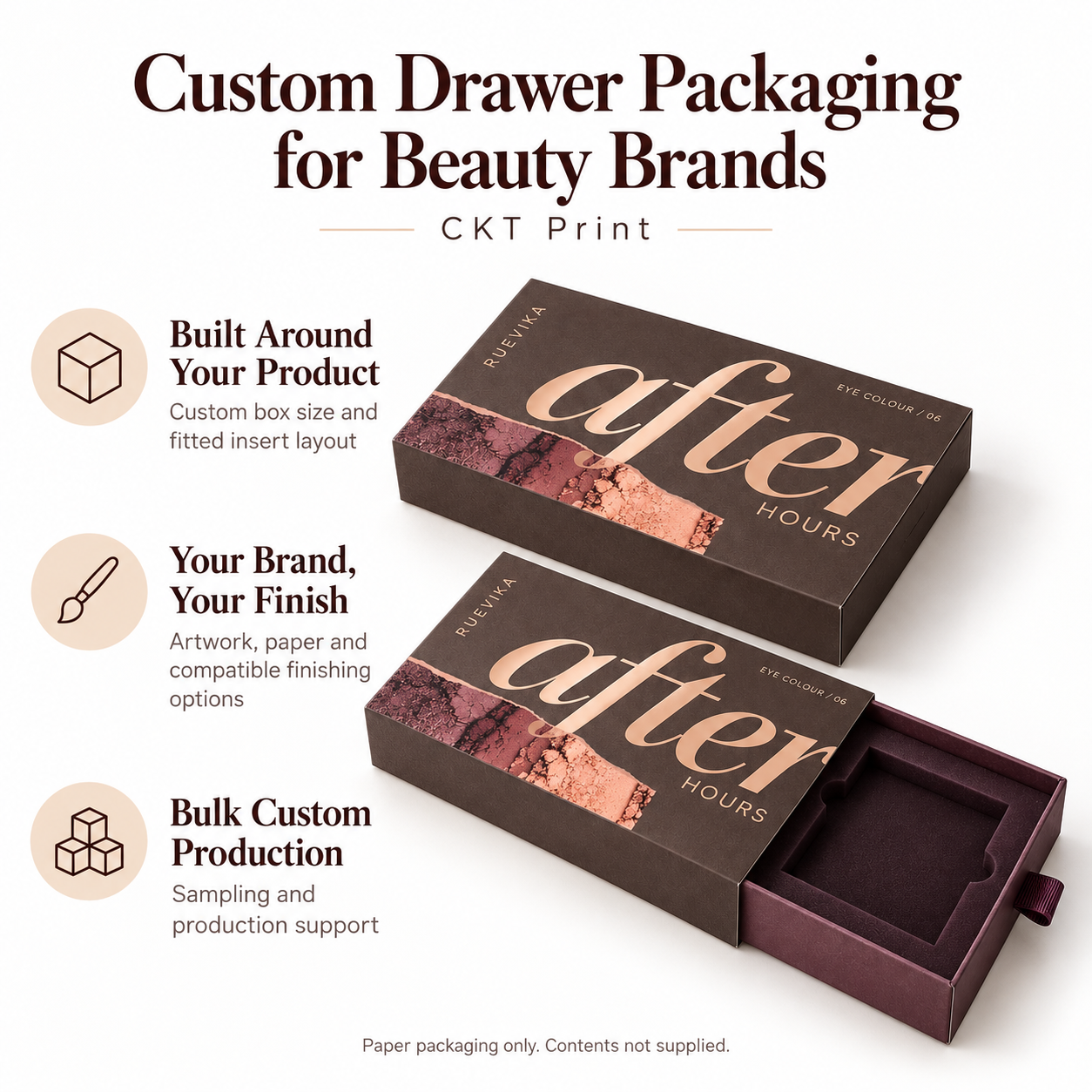
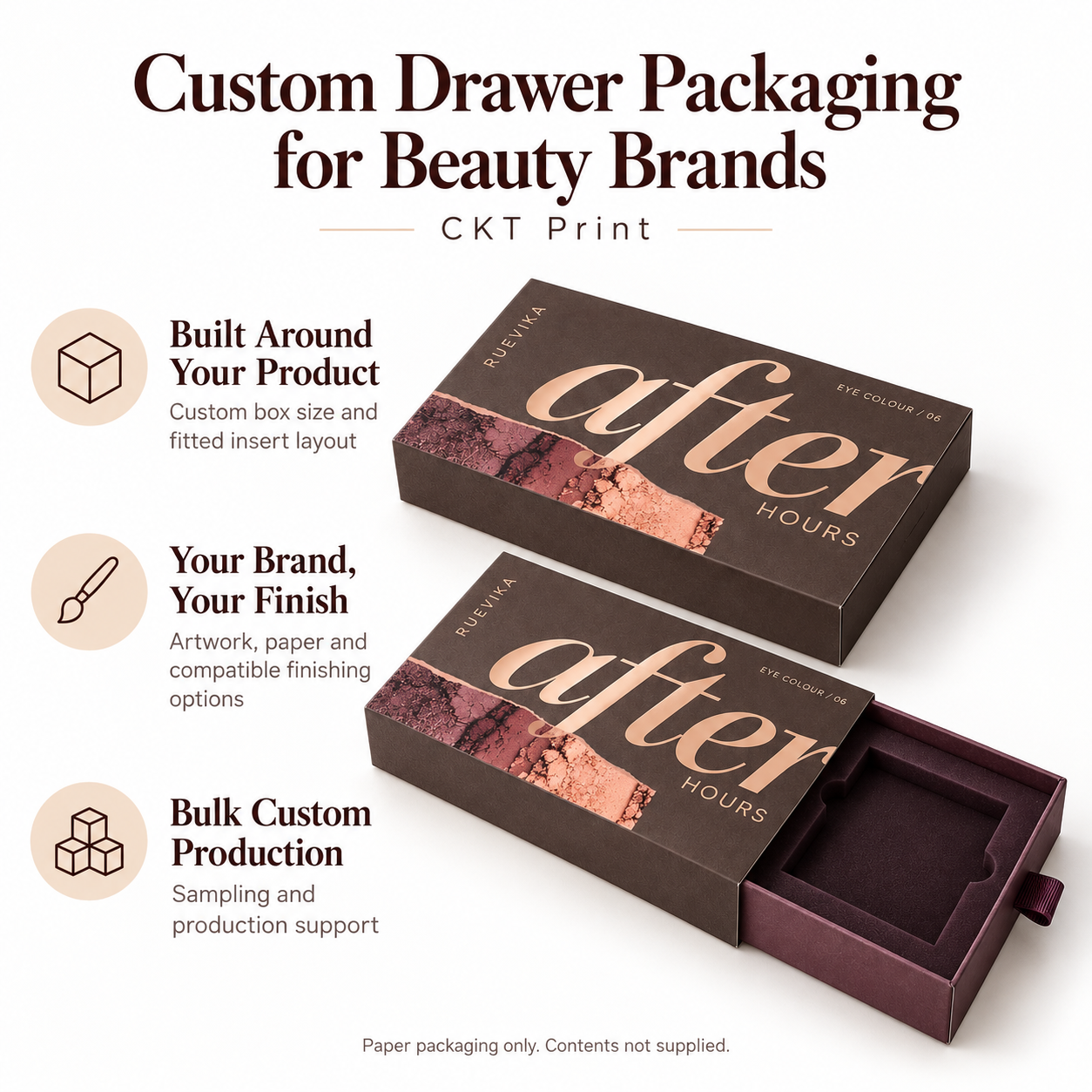
Figure 6. Custom size, fitted insert layout, artwork and compatible finishing options; paper packaging only.
8. Contact
Sherry Wu | Shenzhen CKT Print Co., Ltd.
WhatsApp +86 15815525889 | info@cktprint.com | www.cktprint.com
Alibaba storefront: https://cktprint.en.alibaba.com/
Factory: 2-3F, Building 3, Zhong Xin Industry Area, No.8 Yuhu Road, Fenggang Town, Dongguan, Guangdong, PRC


 Your message must be between 20-3,000 characters!