Coordinated Fragrance Gift Set Packaging with Custom Boxes Bags Labels and Tissue
2026-11-25
Coordinated fragrance gift-set packaging is four components produced against one colour target: a magnetic lid-down rigid box, a paper carrier bag, roll-fed self-adhesive labels and printed tissue paper, finished, inspected and packed as a single order.
What the reference construction specifies, one attribute per line:
Rigid box: printed paper wrapped over greyboard, lid-down, concealed magnet closure, no visible hardware.
Paper bag: same print, rope or ribbon handle, folded side gusset, board weight set by bottle load.
Labels: die-cut self-adhesive, supplied on roll or on sheet, custom die shape and release format.
Tissue: lightweight wrapping sheet carrying a repeat logo print.
Insert: none in this reference; paper collar, EVA or moulded pulp are available on request.
Colour: one Pantone reference applied across box wrap, bag paper, label stock and tissue.
Dimensions are not fixed by the reference. Box size follows the bottle footprint and the insert layout, and bag size follows the box. Both are set at sampling, not from a catalogue.
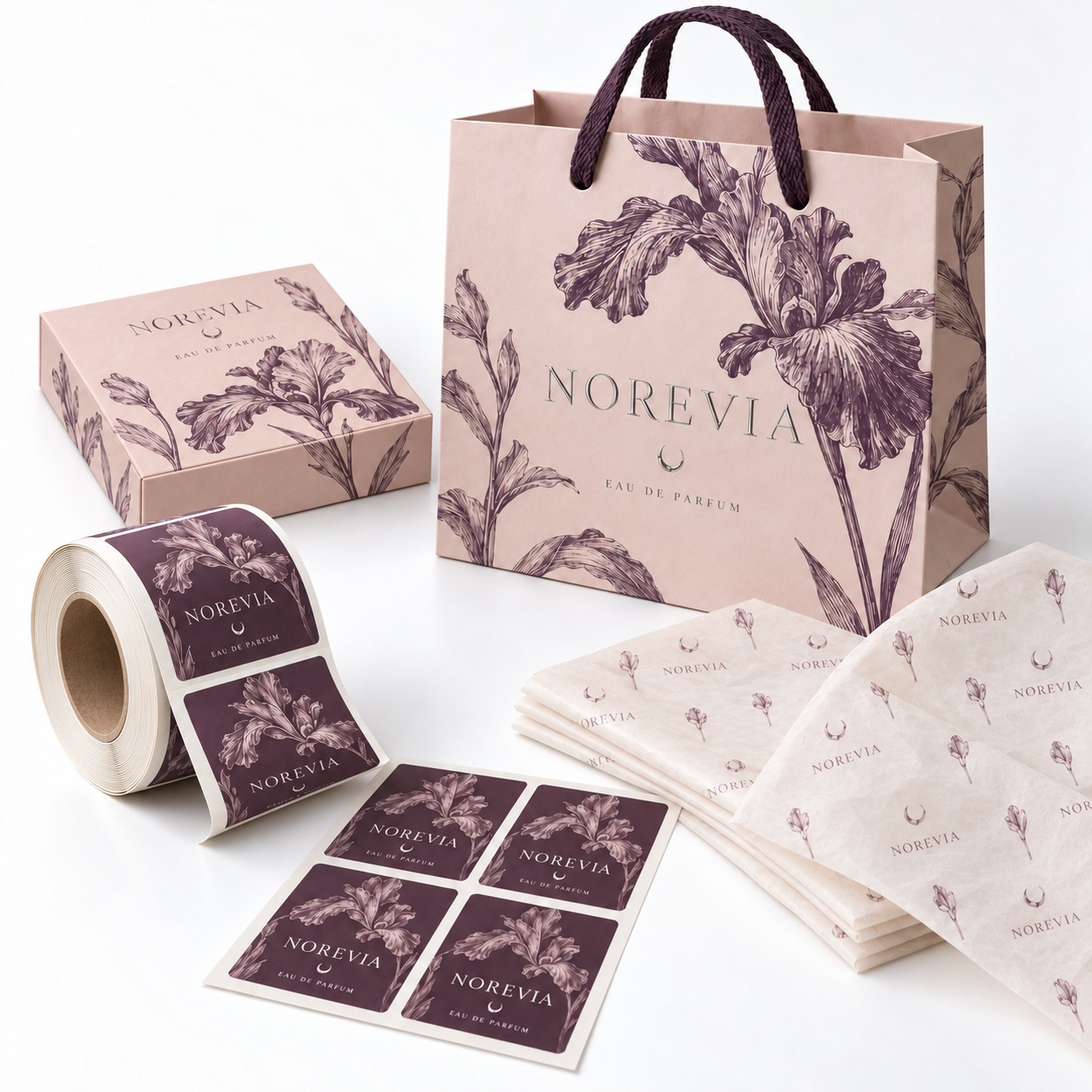
Figure 1. The four components as delivered: rigid box, carrier bag, label roll, die-cut label sheets and printed tissue.
Why a gift set is bought as one order, not four
The four components sit on four different substrates: coated board for the box wrap, uncoated or lightly coated stock for the bag, paper or film for the label, and thin tissue for the wrap. The same ink film reads differently on each. On coated board it holds gloss and depth; on uncoated bag stock it sinks and greys; on tissue it spreads and lightens. Four suppliers working from one Pantone number will produce four values.
A coordinated set benefits from one approval process covering all substrates. Approve a physical color target and substrate-specific samples under agreed lighting; different papers may need different ink formulations or press adjustments. Compare the box, bag, labels and tissue together, including floral line weight and background tone.
The reference box is a lid-down rigid construction: a greyboard core wrapped in printed paper, with magnet pairs set into the lid and the base flange so the lid closes flat and stays shut without a ribbon or a clasp. Core thickness is chosen against bottle mass and set height, typically between 1.5 and 2.5 mm; wrap paper typically runs 100 to 157 gsm. Neither figure is a rule, both are driven by how much the lid has to resist.
Three details decide whether the box performs and presents consistently. The first is the lid-to-base gap: too tight and the wrap scuffs on every opening, too loose and the silhouette reads slack. The second is magnet depth: a magnet set proud of the board shows as a bump under the wrap. The third is corner wrapping: the wrap has to turn the corner without a visible pleat, with the method and acceptance criteria agreed on the finished sample.
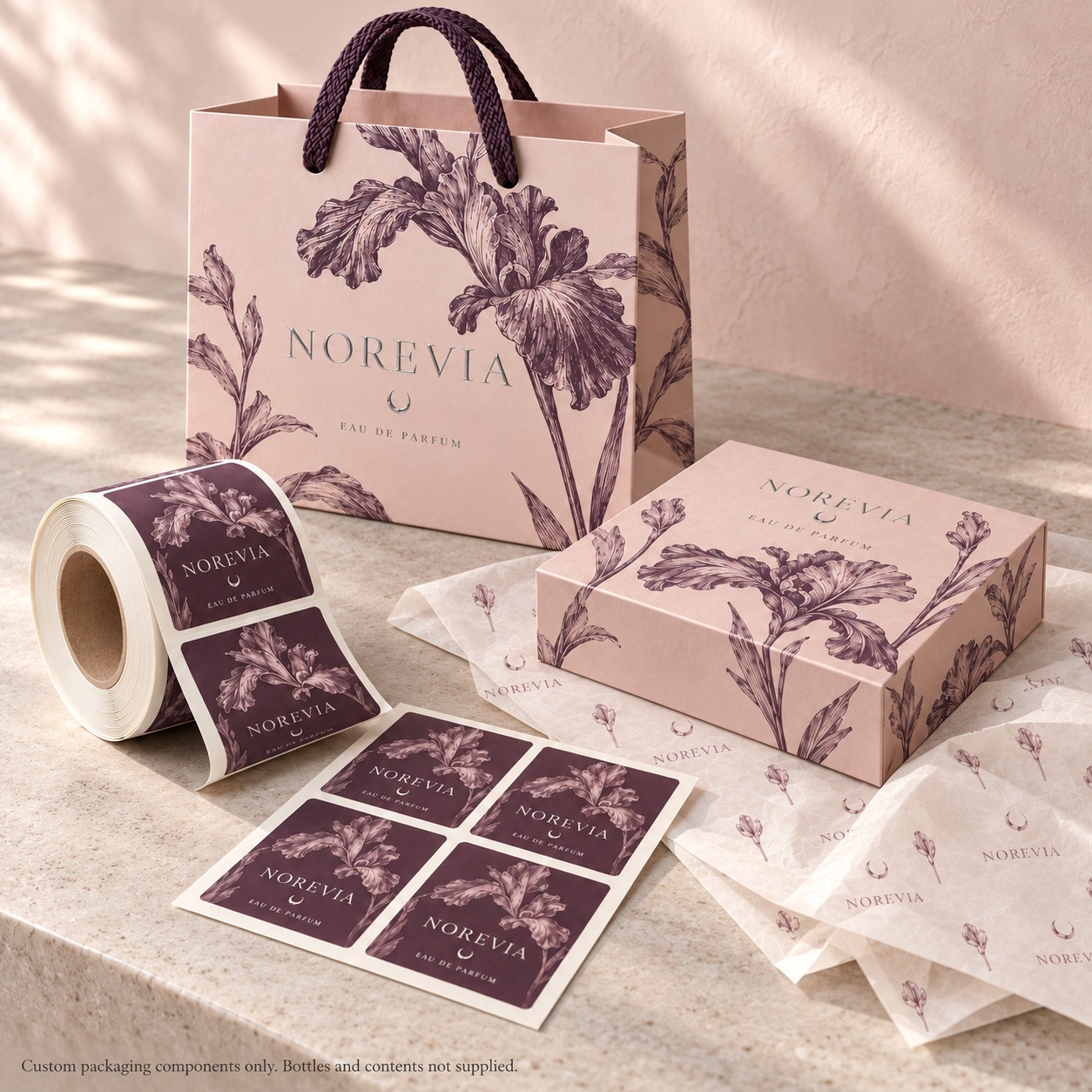
Figure 2. Box, bag and tissue on a stone surface; the print reads at the same weight across board, bag paper and tissue.
The bag, the labels and the tissue
The carrier bag carries the largest printed area in the set, so it is where colour drift shows first. Board weight, gusset depth and handle type are chosen against the box: a bag that is too light for a rigid box folds at the gusset before the customer reaches the car. Rope handles are anchored through reinforced board, ribbon handles through a punched and glued patch; both change the bag cost line.
Printed tissue introduces another paper surface and folding pattern. Choose an ink system compatible with the stock and process, and assess drying, rub resistance, show-through and transfer onto adjacent surfaces. Position the repeat so the identity remains readable after wrapping; approve folded samples as well as flat sheets.
Material and print details
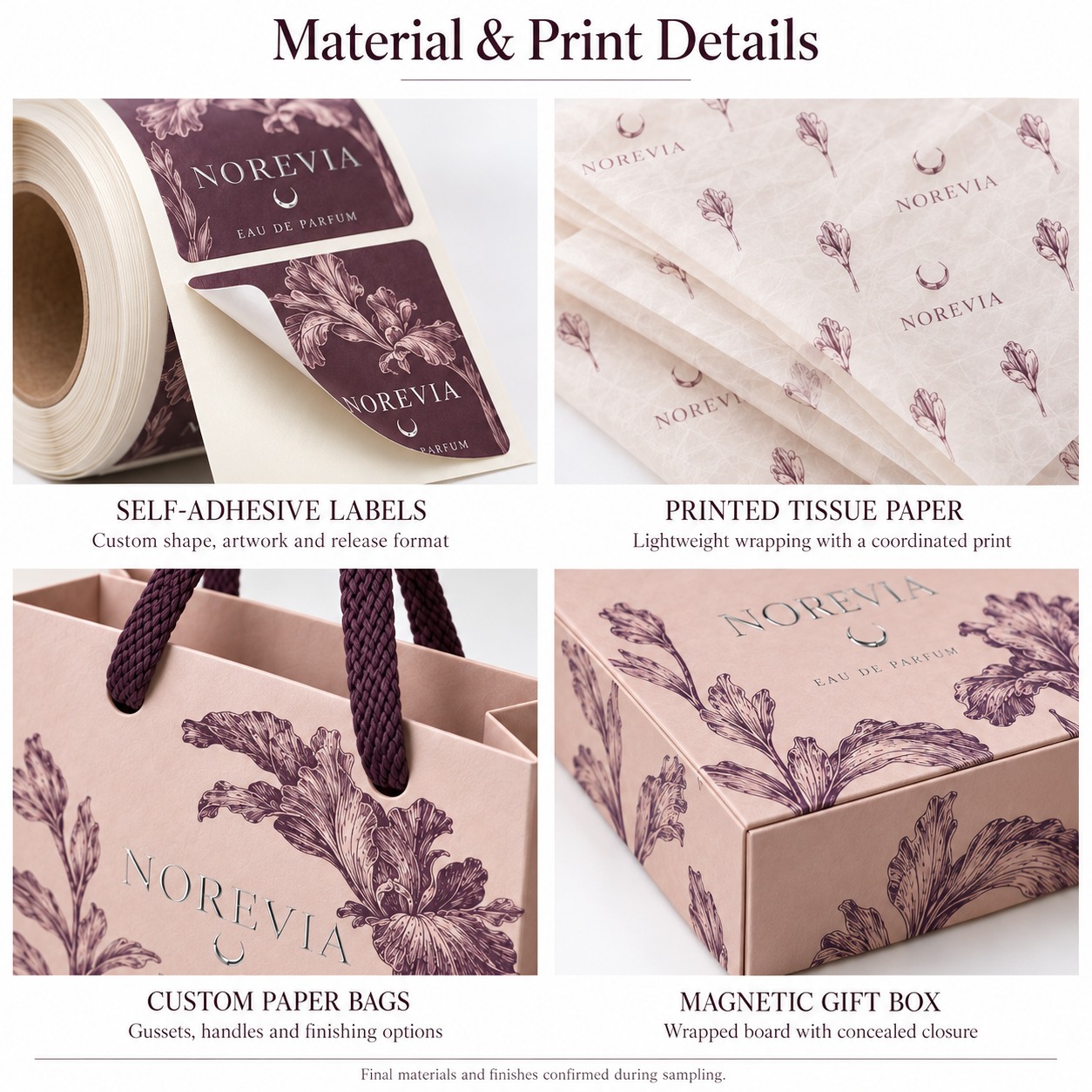
Figure 3. Detail views: self-adhesive labels, printed tissue, bag handle and gusset, and the wrapped magnetic box.
The reference design emphasizes printed floral artwork rather than a specified foil or spot UV treatment. Confirm coatings and lamination in the production specification because images alone cannot establish them. Magnets, handles, adhesives and label liners also form part of the material assessment; paper-based components do not automatically make the complete set mono-material or recyclable.
If FSC-certified materials or on-product FSC labels are required, confirm the applicable certified supply chain and product documentation before artwork approval. This reference design does not by itself establish certification or regulatory compliance.
One coordinated order provides a shared artwork review and an approval schedule covering all four components. Whether components can share a press run depends on stock, sheet size, ink system and finishing. Labels and tissue may require separate processes. Any cost savings should be calculated from actual setup, proofing, freight and coordination requirements.
Plan the full converting and assembly sequence: rigid box wrapping, closure installation, bag construction, handle attachment, label converting, tissue printing and final kitting. Equipment and manual work vary by specification and factory workflow. The delivery schedule should follow the component with the longest confirmed lead time.
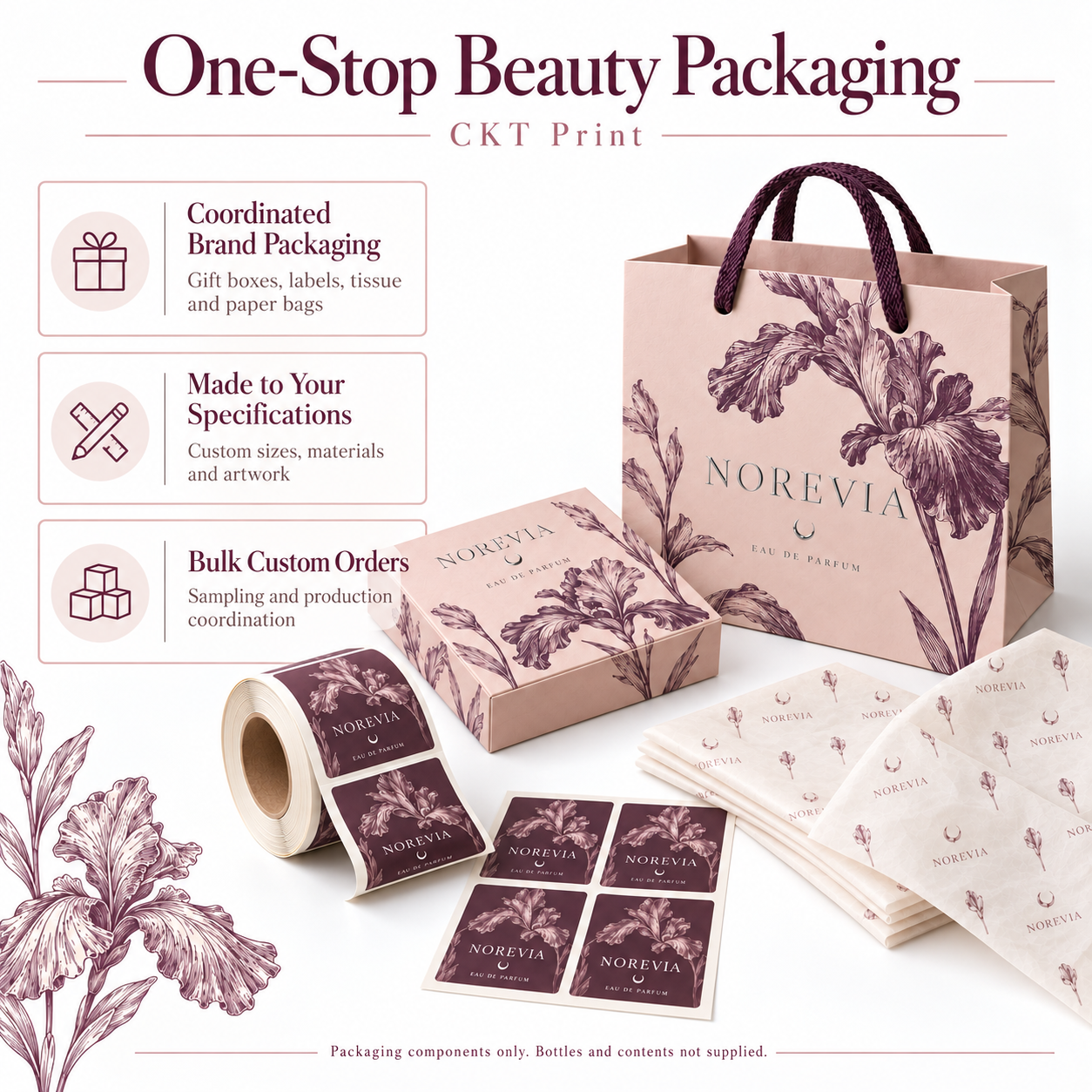
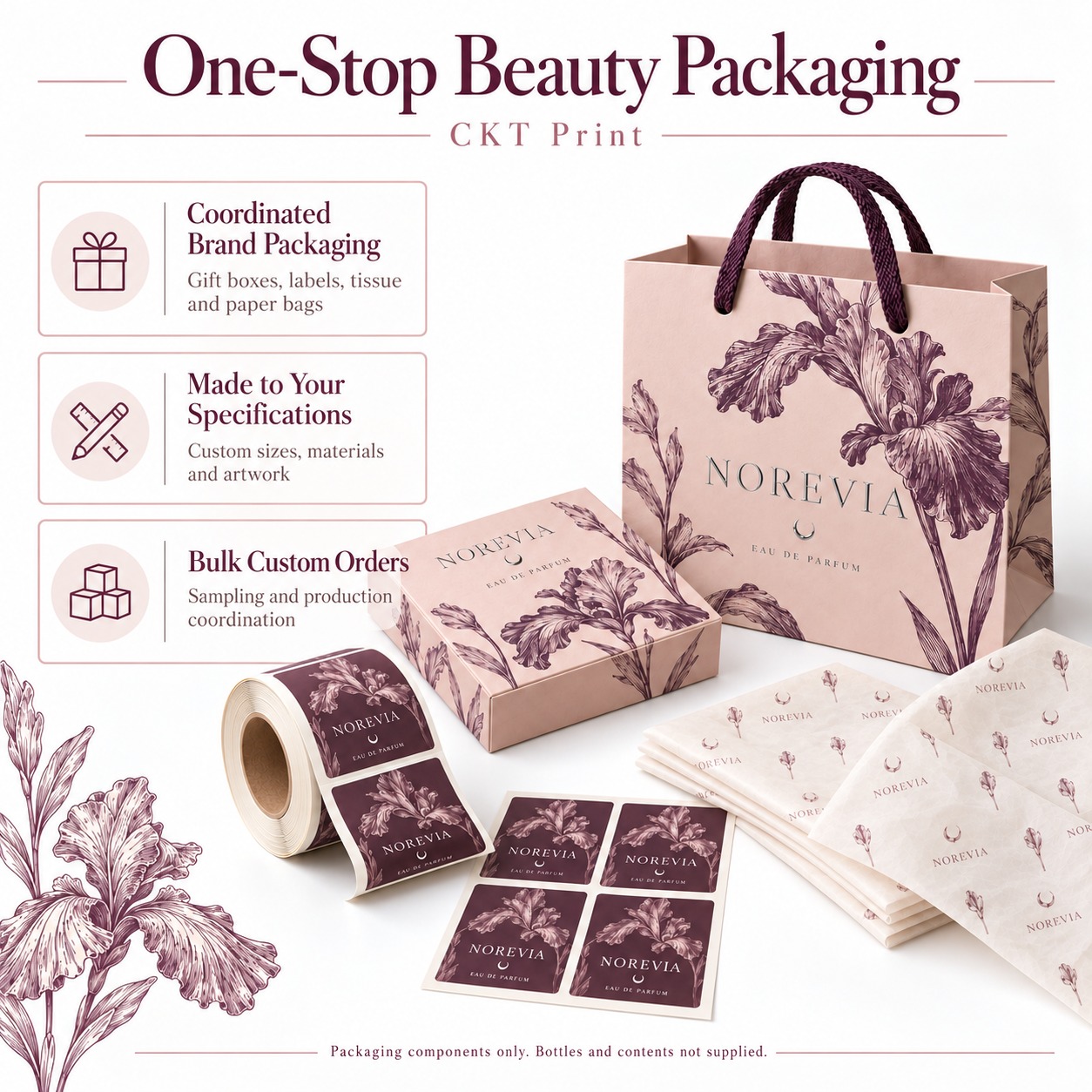
Figure 4. One-stop scope: coordinated gift box, labels, tissue and paper bag, made to specification, run in bulk.
Order structure and how the price is built
MOQ depends on material purchasing, tooling, press setup, converting and assembly requirements for each component. Ask for component-level minimums and quantity breaks. For a smaller launch, compare a complete set against a staged order, while accounting for repeat setup charges and the risk of color variation between releases.
For repeat programs, agree the forecast, quantity per release, storage responsibilities and artwork revision process. Retain approved samples and material records for future checks. A shared supplier can simplify coordination, but repeat-order color still needs verification against approved references.
Compare quotations on the same component basis
Compare three sourcing configurations: a rigid box only; a box with a fitted insert; and a coordinated set including a bag, labels and tissue. Request the same dimensions, paper specifications, quantities and delivery terms for each. A low box-only listing price cannot establish the cost of the complete set.
A useful comparison separates the box, bag, label quantity, tissue sheet count, tooling, kitting, packing and freight. Clarify whether labels are priced per piece or roll, and whether tissue is priced per sheet or pack. Compare landed cost only when the destination and shipping assumptions are identical.
Questions buyers ask before a set is quoted
Is the whole set quoted as one unit price or four?
Request separate cost lines for the box, bag, labels and tissue, plus any kitting, packing and freight. A combined set price can also be supplied once the contents and quantities per set are clear.
Can the bag, the labels and the tissue match the box exactly?
A coordinated visual match is the goal, with substrate-specific samples reviewed together under agreed lighting. Define practical visual and, where appropriate, measured acceptance criteria. One Pantone reference alone does not guarantee identical appearance across all papers.
Is an insert included?
Not in this reference construction. A paper collar, an EVA block or a moulded pulp tray can be added, and each changes the box depth. Bottle diameter, shoulder height and cap width have to be supplied before the insert drawing is fixed.
What is needed to quote a set?
Bottle dimensions with a drawing or a physical sample, set composition, annual volume, release schedule and the artwork status. A quote without the bottle drawing is a price for a box size, not for a set.
Factory: 2-3F, Building 3, Zhong Xin Industry Area, No.8 Yuhu Road, Fenggang Town, Dongguan, Guangdong, PRC.
To quote a coordinated set, send the bottle drawing, the set composition, the annual volume and the release schedule. The quote will be built line by line, not as a single blended unit price.


 Your message must be between 20-3,000 characters!